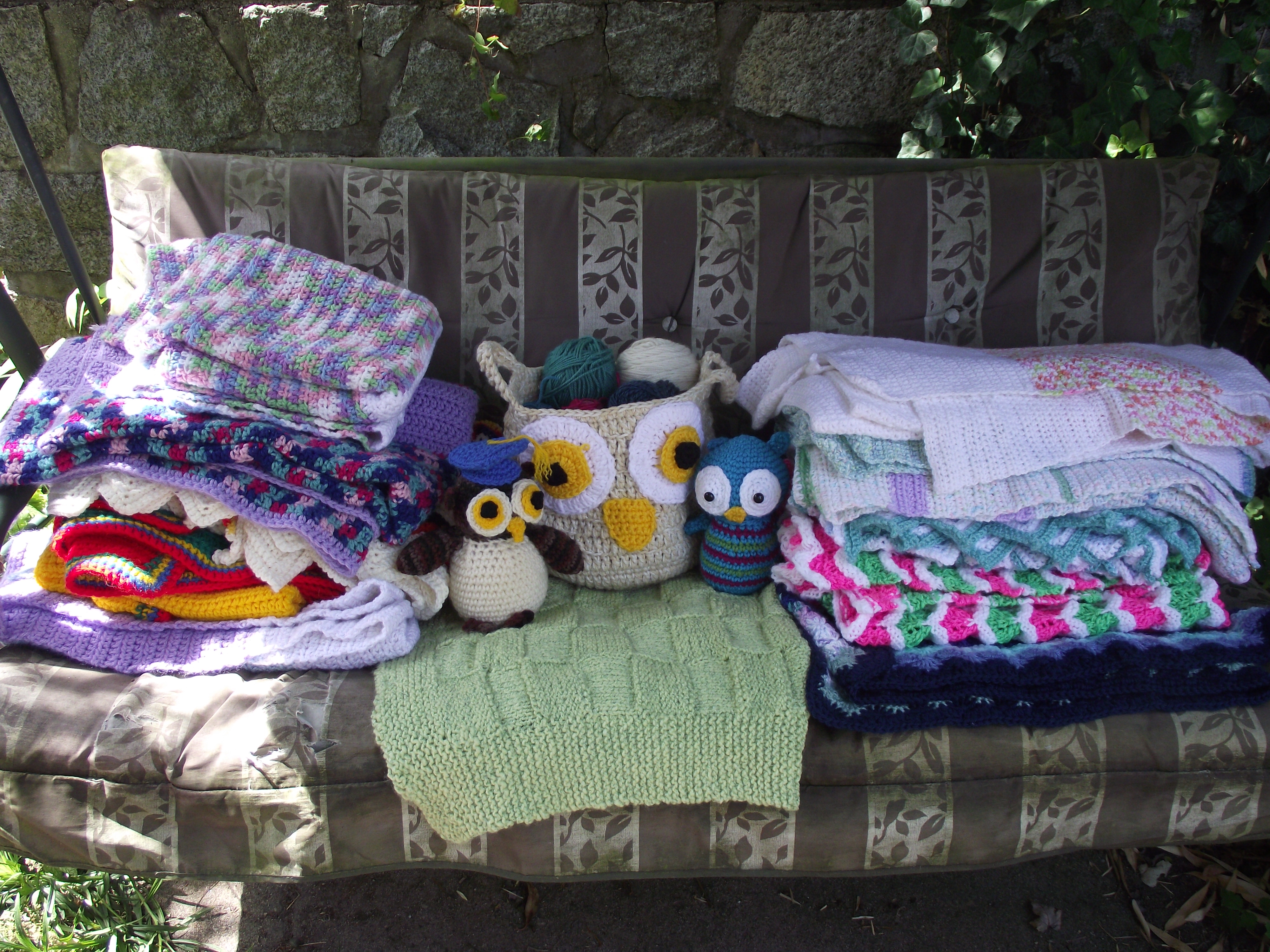
Those never-to-be-completed Projects

I had put away in my attic some unfinished projects (puffy yarn pillow, child’s purse) with the intention of getting to them at some point. But the cats had other ideas and conveniently peed on them. I say conveniently, because they are teaching me about taking care of my yarn and my unfinished projects.

As much as it saddens me, I have had to throw out several skeins of yarn because of cat pee. I worry that even if I washed it, some other cat could still smell the scent and decide to mark its territory. I would not want that to happen to someone who needed a blanket.

The lesson? Never leave precious yarn on the floor, or in a bag where a cat could crawl in and create a cozy litter box.

It does irritate me. I have to then go out an replace the yarn. It isn’t expensive, but if it happened enough it would add up. And it might be the skein I need to finish the project.

As for those items in the attic, they obviously didn’t mean that much to me, or I would have finished them and donated them. The puffy yarn pillow was cast on and bound off too tightly, so it didn’t lay flat, so it would not have made a good pillow anyway. And since that yarn seems to be not a popular as it once was, I don’t feel obligated to show examples of it.

There was a good blog in Love Knitting about how good it sometimes feels to rip out (frog) a project that doesn’t work out as it should. That is a good option if the project is not living up to your expectations. But peed upon? It is not worth it to me to try to salvage it. Out with it. Sadly, but good riddance.

Some projects just don’t work out. You know it as you work on it. It’s a struggle; you can’t stand the sight of it; it causes you grief.

Your options? Rip it out and use the yarn for something else. Throw it out, even if unfinished. Donate it – sometimes I’ve found needlecraft projects in thrift stores that have been started by someone who didn’t want to finish it. As long as you have all the yarn required, maybe you can tackle and finish it.

Handwork is meant to be pleasurable and stress-free. There is no need to ‘suffer’ with a project that you hate.

And be careful where you leave your project (especially if you love it and you live with critters).
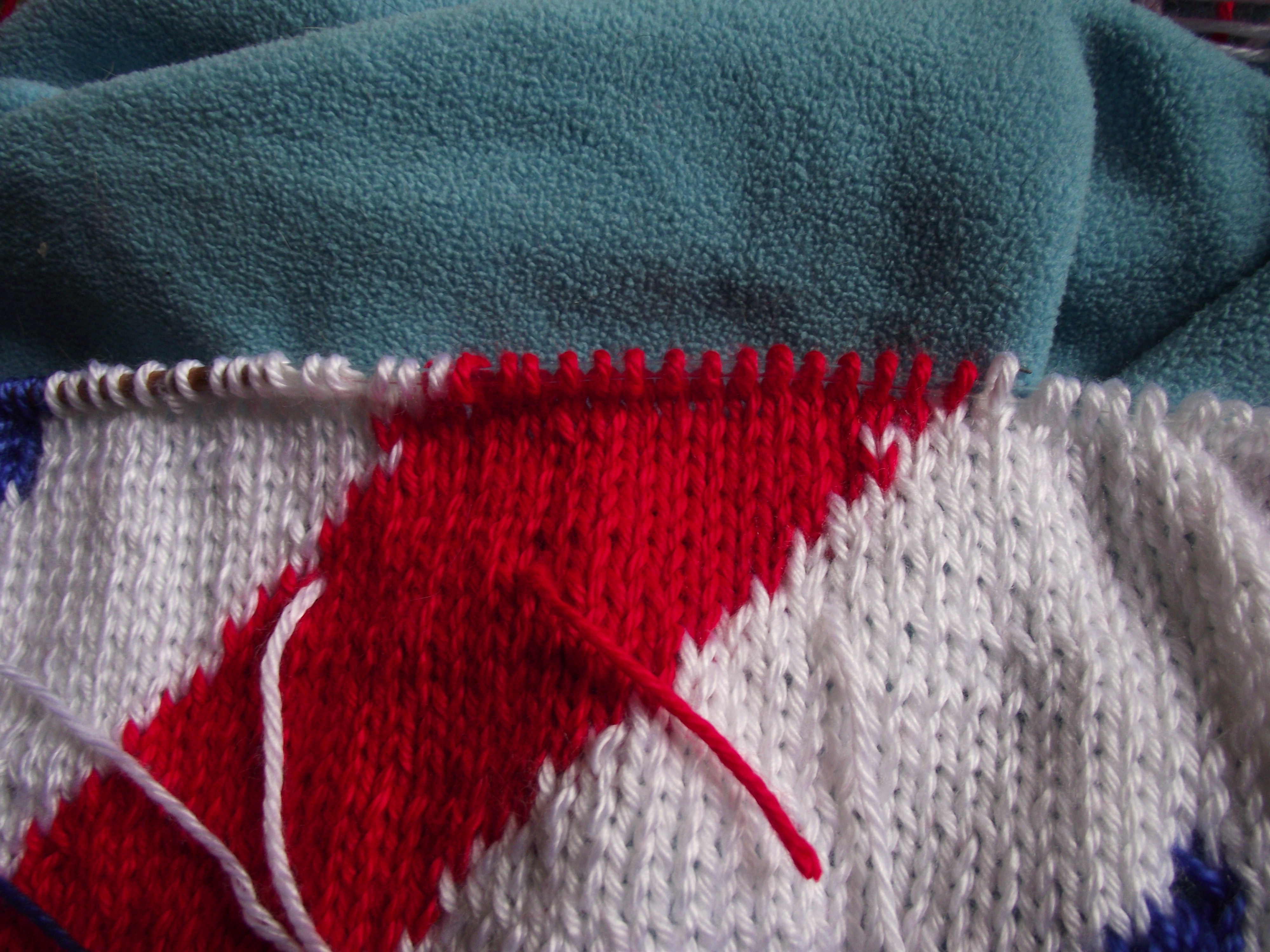
To Err is human, to fix, devine

DSCF2611Mistakes in your projects are inevitable. If you make a mistake in your yarncraft, you may have to fix it. At other times, you may choose to fix it, and at others, choose to ignore it.

There are some errors which you must fix, such as when you are doing a project on circular needles that calls for you to join it after the first row i.e. a hat. If you accidentally twist that first row, your project will not lie flat, and wearing a hat with a twist in it would be mighty uncomfortable. Therefore, you must undo your work to back to first row, make sure it is not twisted, and re-join and carry on.

Another type of error you must fix is a dropped stitch. If you are working a pattern, such as a lace, your count will be off, so you will soon notice this and have to fix it. It may mean undoing several stitches, but to get yourself back on track it is worth the time. If you count at the end of every row, and your number is off,  you only have to figure out where you went wrong on that one row. The same goes for crocheting. If you make a mistake in your shells, for example, they won’t lie properly on top of one another and it will look off-kilter.

The next type of error is one you can choose to fix or not. This would be something like a twisted stitch or a skipped stitch. If it doesn’t affect the look of the row, and if it doesn’t bother you, then let it go.

Some people are perfectionists, and knowing that a stitch is wrong, it will bug them to the point that it drives them crazy. They simple cannot live with that imperfection. In that case, it is better to fix it, no matter how much effort it takes, so that they have peace of mind.

Also, you have to take into consideration where this project is going. If it is for yourself, and every time you wear that scarf, and you remember that flaw, it is better to fix it. On the other hand, if you are donating it to a person who is more interested in warmth than perfection, then let it go.

As well, if you are being paid to make a professional looking item, you want it to be close to perfection as possible.

“The Amish people intentionally sew at least one error into their beautiful quilts…Their thinking is nothing made by a human being should be perfect”.

After all, this is a hand-made item, so it will never be as perfect as a machine made item. But, you don’t want it to look like it was hand-made by someone who didn’t care how it looked either.

Knitting Books – both old and new

1980 Knitting Book
1980 Knitting Book

I recently purchased this book for 1 cent (plus shipping). You may ask:. Why would you buy a book published in 1980, when the patterns are so out of date?

I realized that I have many beginner crochet books with techniques in them, but not a lot of beginner knit books. I have plenty of knitting pattern books, but there is not a lot of “how-to”s in them. I have the Sunset book for crochet, which is well-worn and frequently used, so I thought the equivalent in knitting would be just as useful. And all for 1 penny!

The patterns are pretty groovy, to say the least, but it does have good illustrations for basic techniques.

My favourite book of all time is the Reader’s Digest Complete Guide to Needlework, and I refer to this quite often. Its only drawback is that because it also contains information on embroidery, quilting, macramé, rug-making, lacework, needlepoint and applique, it is quite heavy to carry around.

I’m still getting used to the Sunset Knitting book – hope it becomes as well-worn as my crochet one.

On oldie, but a goodie.

Felting Needs Water

I want to do some felting of wool projects in the washing machine. However, with the water restrictions in place, I can’t really justify using all that water for some little balls. It will just have to wait until the rains come. Even then, I should be washing other things along with the cloth bag with a couple of projects in it. I rarely use hot water for laundry, but it seems necessary to felt.

Why so many WIP’s?

DSCF2609The cat is already finished.

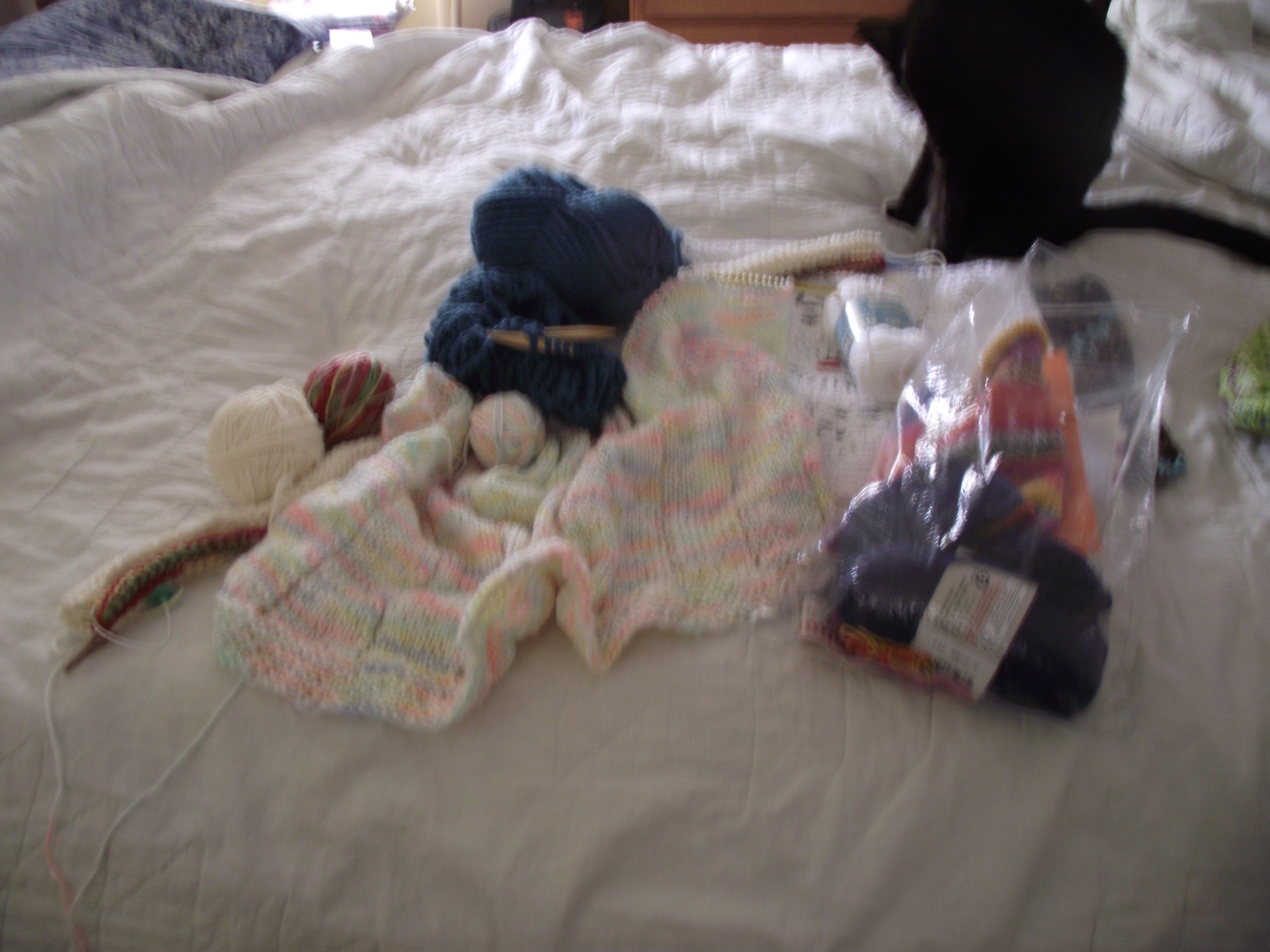
First, I should explain what a WIP is. This stands for Work in Progress – in other words, something I haven’t yet finished because something more interesting caught my fancy and I abandoned this current project for it. Temporarily!

One reason I have so many WIP’s is that I do both knitting and crocheting, so I would have to have at least two things going at once. Another reason is that I primarily make blankets, so they take more time than other projects and I get bored with them.

I will make a few arguments against having so many at once:

Sometimes when I go back to a project, it takes time to see where I’m at in the pattern. I have to make sure I take good notes about what row I’m on when I put something to the side so I can get back into it at the right spot. Other projects go out of style if they are hidden away for too long. And even they can become too small. I was helping someone with a sweater for her son, and it was getting close to being too small at the time. She never finished it for him, but had to send it to a nephew who was much younger and smaller. So sometime you really do have to get some things finished before working on something else.

However, some projects are more intense than others. An intricate pattern requires more concentration, and maybe after one repeat, it is time to take a break, whereas others are simply back and forth.

Switching around different projects keeps things interesting. I might do a stripe of a particular colour on one project, or on another I might do a repeat of the pattern. This creates a natural break point to switch to something else. I might do 10 rows on one project. I might do a square or motif on another project.

A very legitimate excuse is when you run out of yarn. You have to stop what you are working on until you can buy, or find in your stash, the yarn to carry on. Sometimes, if it is something you ordered online, it may take a while to get more. Meanwhile, you have a good excuse to work on something else.

People who only have one thing on the go at a time are highly disciplined. I’m not one of them!

Knot or Not

DSCF2606It used to be a cardinal rule never to have knots in your work. You should always start a new skein or ball of yarn on the edge so that you don’t get a bump in your work. I think this is good advice which I usually adhere to. It does waste yarn, but the end effect, of having a smooth piece of work, is worth it.

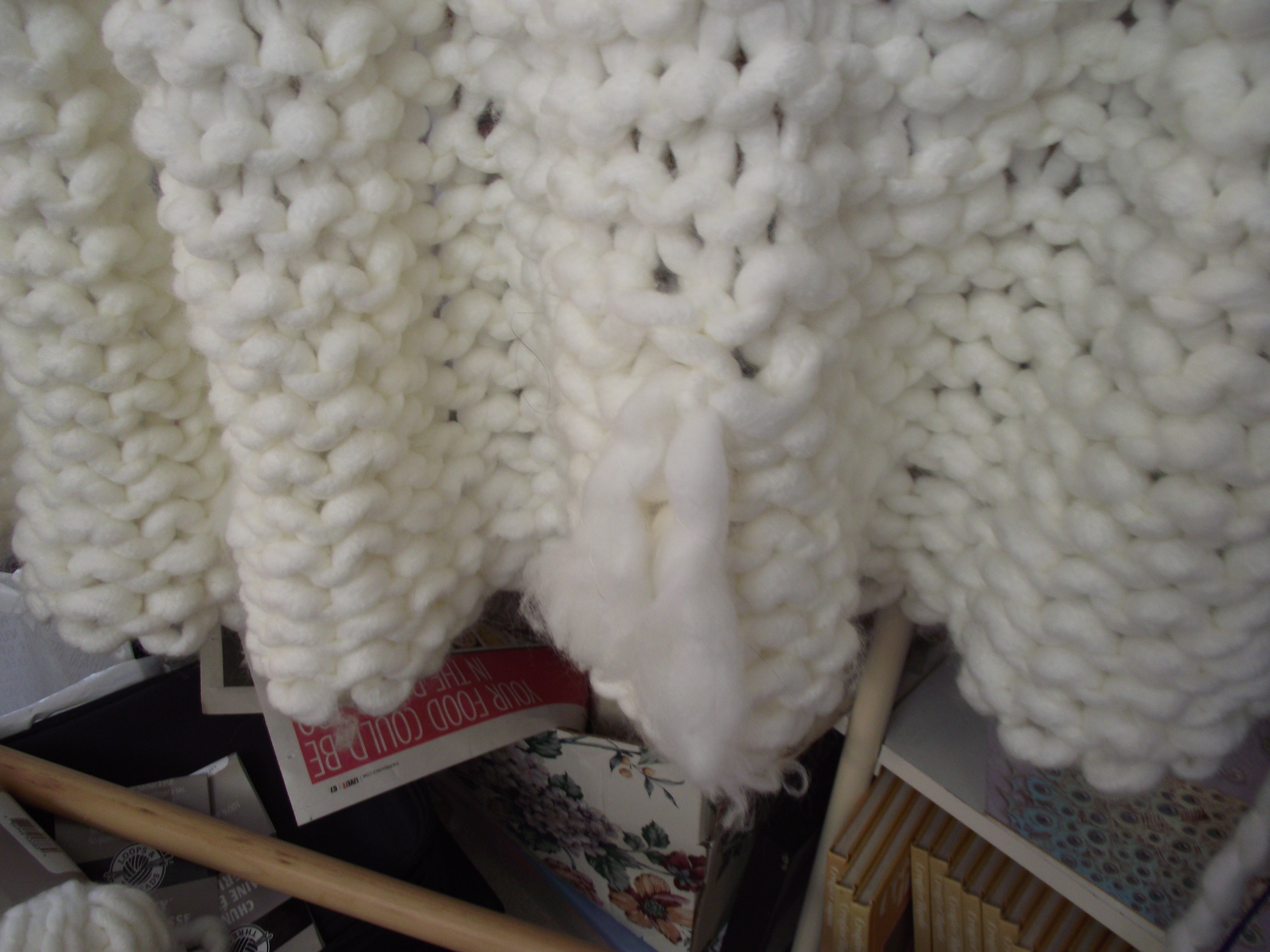
But now I am rethinking this a bit. One of my WIP’s is a blanket knitted on really large needles, and using really chunky yarn, but the skeins only have 27 yards on them – that does not go far! So I looked up on-line how to tie a knot in my yarn. Yes, really. There are techniques that ensure a tight knot that will not come undone, as well as not being a huge bump in your work. I am going to use this in my ‘giant’ work because it seems a more efficient use of those short skeins (I would waste yards and yards if I had to start a new skein when I could not complete the row).

For baby items though, I would definitely skip the mid-row knotting.

Rules are really guidelines only, and sometimes are meant to be broken.

Don’t Feel Guilty!

I recently told someone I felt guilty spending so much time knitting and crocheting, and she challenged me to think about this in terms of purpose.

What I realized is that most of the things I make are donated, so someone somewhere is (hopefully) keeping a bit warmer and more comfortable because of a blanket I made.

If I make something that I keep, such as a pillow cover, and I enjoy looking at it, and feel proud, then that was well worth my time and effort.

If I make a gift, that is something that makes the recipient happy, so definitely a good feeling all around..

Sure, I could be doing housework or plenty of other things, but knitting or crocheting for a purpose is nothing to feel guilty about.

As long as other important things get done, i.e. food shopping, laundry, and paying the bills, then why not feel good about spending time with yarn?DSCF2190

More on WIPs

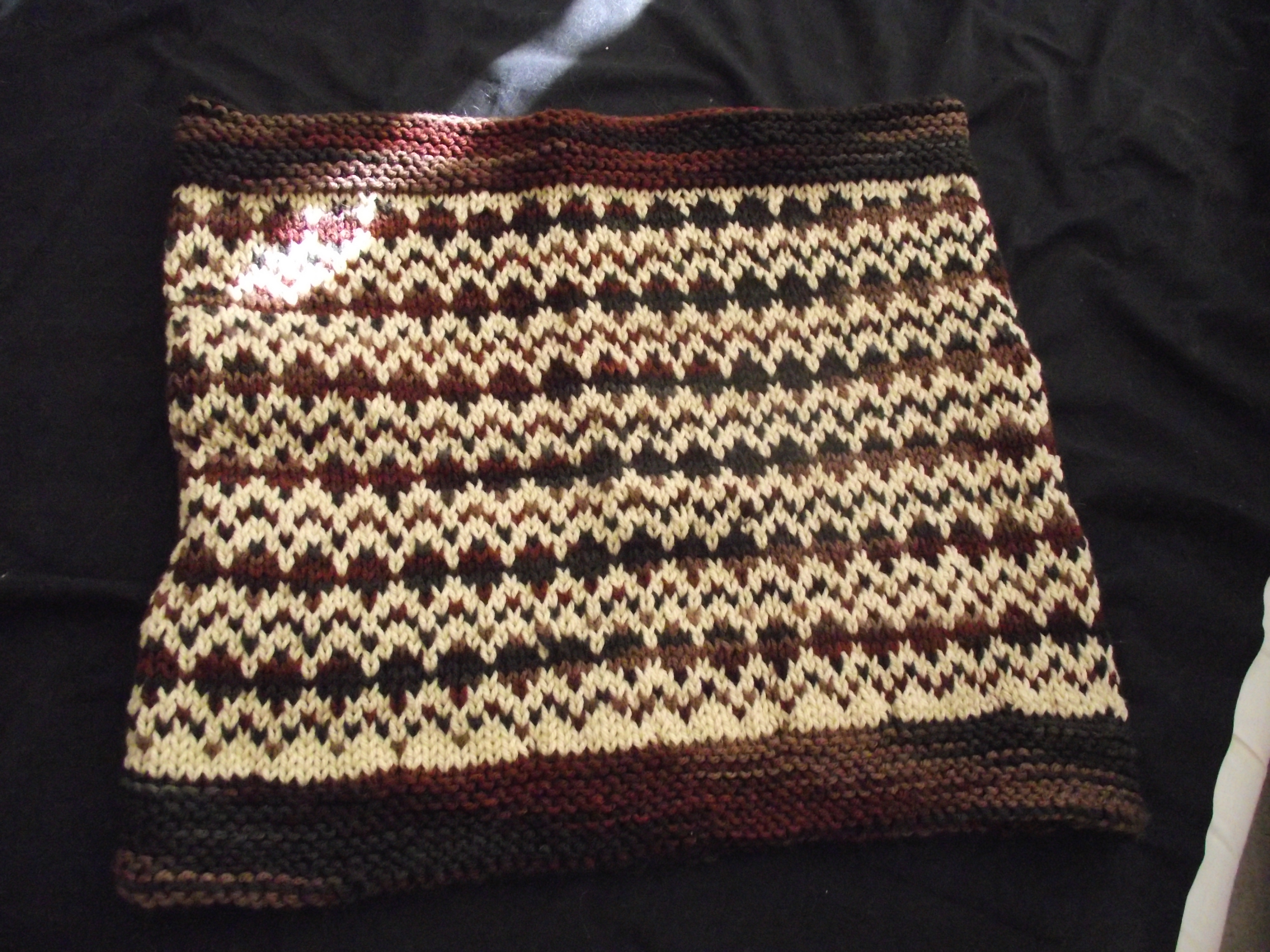
DSCF2613I guess another downside to having so many WIPs is that I don’t seem to finish anything. I get so enthused about a pattern that I have to start it right away and that just adds to the list.  If I do a little bit on several things, nothing gets completed,  but if I took all those bits of time and worked on one project, I would finish it that much quicker.

I know there are things that I just lose interest in.  There was a scarf that I was knitting and I really disliked the yarn I was using, so it was not fun to finish it, but finish it I did.

I actually worked on that been-in-the-cupboard sweater yesterday. The thing that tripped me up about that one is the neckband. I had finished the back, sleeves, and the front, except for the neckband, and had already picked up most of the stitches already, so why I didn’t just pick up the stitches from the back and gotten on with it I don’t know. It was a struggle – that may have been the issue, but it’s on its way to getting knitted.

I always believe I will finish the project, so why not strike while the iron is hot?

Old Works In Progress

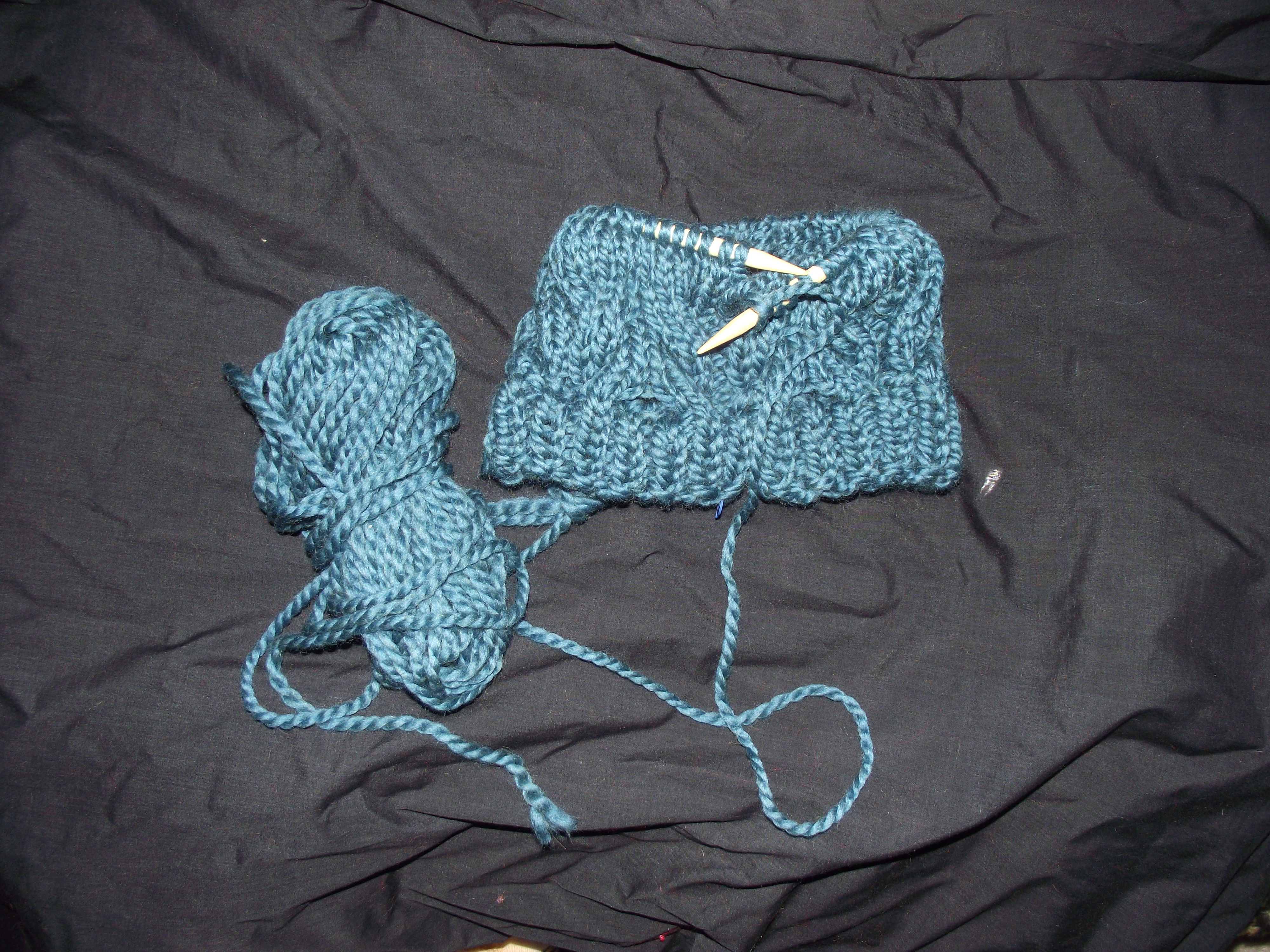
DSCF2615[1]One of the problems with leaving something unfinished for a long time is that it may no longer be “in”. I have a sweater that has been in my cupboard, unfinished, for probably 20 years. It seemed fashionable at the time, but maybe not so much now. I have dug it out, and will now finish it. It also looks too small… I guess I was smaller then as well. When finished, I will try it on, and that will determine which picture will get posted.